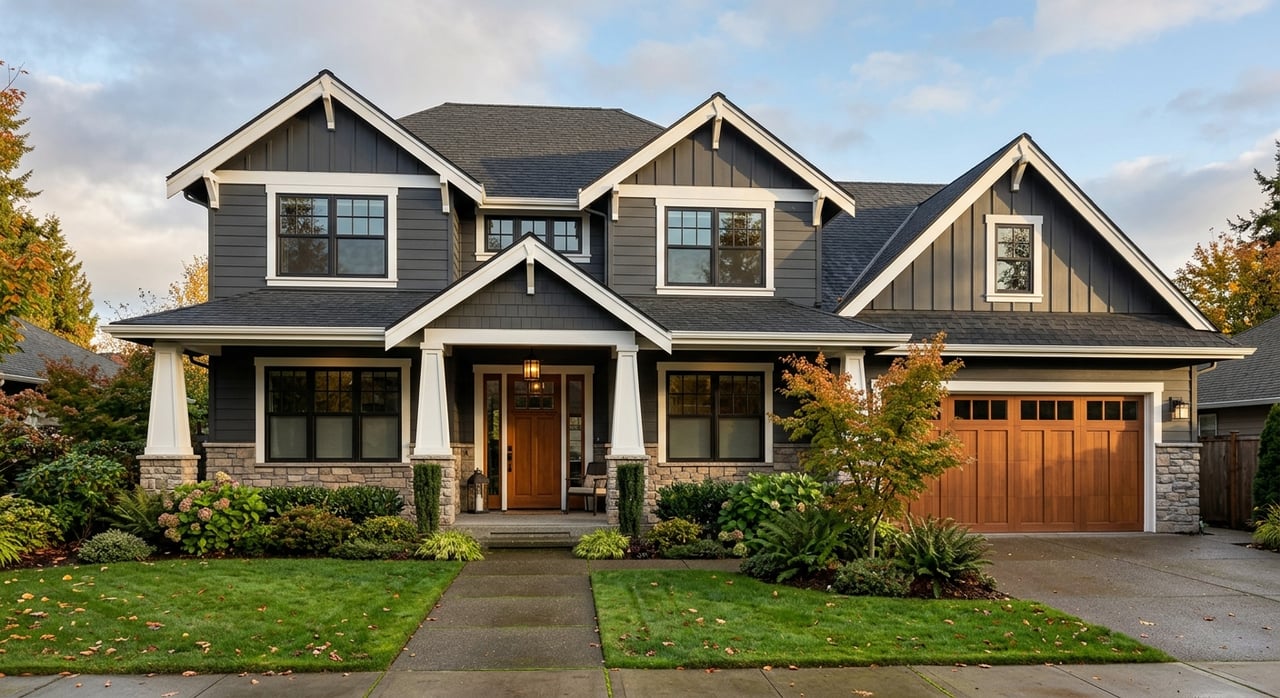
Finding The Right Bothell Neighborhood For Your Next Family Home
April 2, 2026
April 2, 2026
If you are searching for a family home in Bothell, you have probably already realized one thing: not every part of Bothell feels the same. Some areas are closer to major commute routes and mixed-use centers, while others feel more established, residential, and yard-oriented. When you understand those differences early, you can narrow your search with more confidence and less stress. Let’s dive in.
Bothell is a split-county city with 17 subareas, and the city notes that neighborhood boundaries are not fixed. That helps explain why one part of Bothell can feel more suburban and detached-home oriented, while another feels more connected to employment hubs, transit, and mixed-use development. According to the city’s housing overview, Bothell had an estimated 20,824 housing units as of April 2023, including 52% single-family homes, 34% apartments or multifamily housing, and 9% manufactured homes. You can see that mix in the way different areas live day to day. (City of Bothell housing overview)
For many buyers, the right neighborhood comes down to tradeoffs. You may want a shorter commute, more trail access, a larger lot, or a home near everyday services. Bothell gives you several ways to prioritize those needs, which is why comparing subareas matters more than relying on the zip code alone.
Before you compare homes, it helps to decide what matters most in your routine. A neighborhood that works well for one household may not be the best fit for another.
Think about questions like these:
Once you know your top priorities, Bothell becomes much easier to read.
Canyon Park is one of Bothell’s clearest examples of a commuter-oriented area. The city describes it as a high-tech and biotech employment hub with strong access to I-405, SR 522, SR 527, SR 524, and 228th Street SE. Much of the area was developed in the late 1980s and early 1990s, and its layout reflects that regional-access focus. (Canyon Park overview)
If your daily schedule depends on getting in and out of Bothell efficiently, Canyon Park may be worth a close look. The tradeoff is that areas near major corridors and employment centers can feel busier and more connected to growth than some of Bothell’s quieter residential pockets.
North Creek is a strong option if you want a balance of outdoor access and regional connectivity. The city identifies it as a major employment center with business parks, three hiking, walking, and biking trails, plus access to North Creek Forest. The road network here is shaped by natural features like wetlands, North Creek, and topography, while NE 195th Street and NE 180th Street connect the area to I-405 and SR 522. (Bothell planning references for North Creek)
For buyers who want recreation close to home without giving up commute convenience, North Creek can stand out. It is especially useful to compare if trail access ranks high on your list.
Downtown Bothell offers the most urban-feeling choice in the city. It is the historic core, with retail, commercial uses, residential development, the UW Bothell and Cascadia campus, and open space along the Sammamish River and North Creek. The city notes that downtown has changed significantly over the last 15 years with new residents, revitalized businesses, and planning updates tied to transit and public-space investments. (Downtown Bothell subarea plan)
If you want more activity, a mixed-use setting, and easier access to trails and services, downtown may appeal to you. If your priority is a more traditional detached-home setting with a larger yard, you may prefer one of the more established residential neighborhoods instead.
Shelton View, Meridian, and 3rd Avenue SE reflect a more classic residential pattern. The city describes this area as almost exclusively residential, with detached dwellings as the predominant housing type. It also notes older subdivisions, large-lot single-family areas, and a manufactured-home development near Meridian and 228th, while daily shopping is generally located elsewhere. (Shelton View / Meridian / 3rd Ave SE plan)
If you picture a neighborhood with more detached homes and less commercial activity nearby, this area may align with that vision. It is a good example of how Bothell can feel quieter and more residential away from major centers.
Westhill is another neighborhood with an established residential feel. Its subarea plan focuses on maintaining existing development patterns, protecting steep slopes and wetlands, and allowing low-to-moderate density housing with some commercial, office-professional, and multifamily uses along SR-522. (Westhill subarea plan)
For your home search, Westhill is a reminder that topography can shape neighborhood feel just as much as house style. Access to SR-522 may be a plus for some households, while others may be more focused on the area’s residential setting.
Maywood and Beckstrom Hill are useful to compare if you are looking for an established area that is still evolving over time. The city says the neighborhood should remain predominantly residential, with higher-density residential closer to downtown and Canyon Park. It also notes typical lot sizes of 8,400 and 9,600 square feet in much of the unconstrained area, along with a mix of housing types that includes the Green Acres mobile home court. (Maywood / Beckstrom Hill plan)
This area can appeal to buyers who want a more traditional residential pattern but still want to stay aware of how nearby growth may influence the broader area over time.
Waynita, Simonds, and Norway Hill are often best understood as south-side residential areas with a strong natural-setting component. The plan emphasizes preserving existing development patterns, protecting the Norway Hill landforms, maintaining the Sammamish River greenway, and keeping manufactured-home parks as part of the neighborhood mix, while allowing some higher-density or mixed-use opportunities in select locations near I-405 and 160th Street. (Waynita / Simonds / Norway Hill plan)
If you want a neighborhood where natural features are a visible part of the setting, this area deserves a closer look. It can offer a different feel from the more corridor-focused parts of Bothell.
Country Village, Lake Pleasant, and the Bothell-Everett Highway area are different from Bothell’s more purely residential neighborhoods. The subarea plan describes limited residential development mixed with commercial uses, along with low-to-moderate density housing, townhouses, multifamily housing, office-professional uses, and community business uses. Transit runs along Bothell-Everett Highway and 240th Street SE, and the plan notes there are no schools within the subarea itself. (Country Village subarea plan)
This kind of area can be practical if you value access to services and transit more than a purely residential setting. It is also a good reminder that some Bothell addresses will feel more like a corridor community than a neighborhood of detached homes.
For many family buyers, school district and attendance area are one of the biggest filters. Northshore School District is the district most commonly associated with Bothell and serves Bothell, Kenmore, Woodinville, and nearby unincorporated areas. At the same time, Everett Public Schools also has Bothell-addressed campuses, including Silver Lake, Cedar Wood, Tambark Creek, and Woodside elementary schools. (Northshore district highlights)
That means you should never assume school assignment based on a Bothell mailing address or zip code alone. Attendance is assigned by home address, so it is important to verify the exact parcel. The city’s capital facilities appendix also shows how schools cluster across the planning area, including Bothell High, Canyon Park Middle, Northshore Middle, Skyview Middle, and several elementary campuses. (Bothell capital facilities appendix)
When you compare Bothell neighborhoods, parks and trails can be just as important as the house itself. The city manages 400 acres of parkland and open space, with 26 parks and more than 3.6 miles of regional trails. The Sammamish River Trail and Burke-Gilman Trail run through the city, and family-relevant recreation assets include places like Centennial Park, Brickyard Road Park, and North Creek Sportsfields. (Bothell parks and recreation)
If weekend routines, walks, bike rides, or sports access are part of your decision, these nearby amenities can make one neighborhood feel much more livable than another. This is one reason two similar homes can support very different lifestyles.
One of the biggest choices in Bothell is whether you want a newer home environment or a more established neighborhood pattern. The city’s plans point to infill and redevelopment in Downtown, Canyon Park, North Creek, Country Village/Lake Pleasant, Queensborough/Brentwood/Crystal Springs, and parts of Waynita/Simonds/Norway Hill. Established areas like Westhill, Shelton View/Meridian, and Maywood/Beckstrom place more emphasis on preserving existing residential patterns. (Bothell housing overview)
Bothell also adopted middle-housing amendments in 2023 that allow duplexes, triplexes, and townhomes in all residential zones. Over time, that may continue to add housing variety across the city. In practical terms, newer options are more often found near growth centers and corridors, while established neighborhoods are more likely to offer detached homes, mature trees, and larger lots.
If you feel overwhelmed by options, try sorting Bothell neighborhoods into a few simple buckets:
This kind of short list can help you spend less time scrolling and more time visiting areas that match how you actually live.
Choosing the right Bothell neighborhood is not just about square footage or price. It is about finding the setting that supports your routine, your commute, and the kind of home life you want next. If you want help comparing Bothell neighborhoods, verifying location-specific details, or building a smart search around your goals, Dafna Shalev can guide you with patient, informed support from first tour to closing.
Stay up to date on the latest real estate trends.
Eastside Real Estate
Buying Market
Palm Desert Golf Properties
Dafna provides expert guidance and personalized solutions tailored to your unique needs. Whether you're buying, selling, or investing, Dafna's warm, witty, and professional approach ensures a seamless and successful journey.